Mari Cortez
Other’s Hands
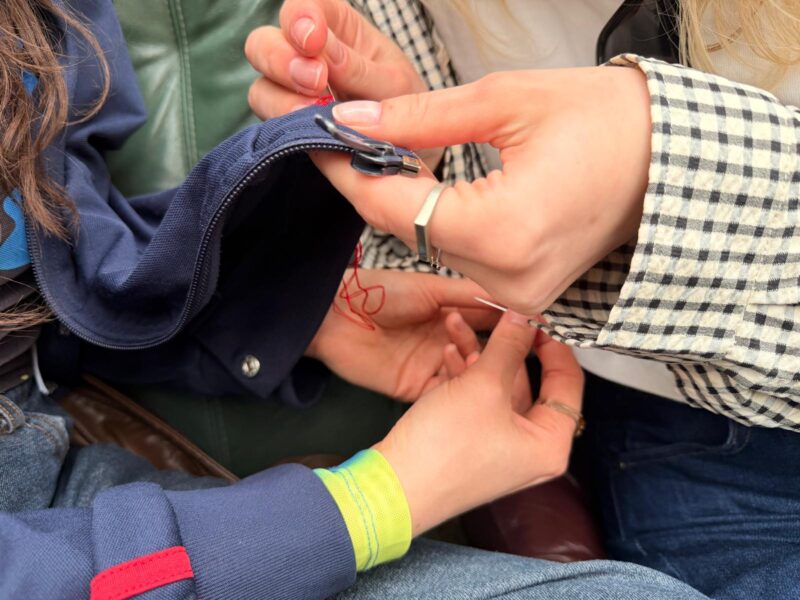
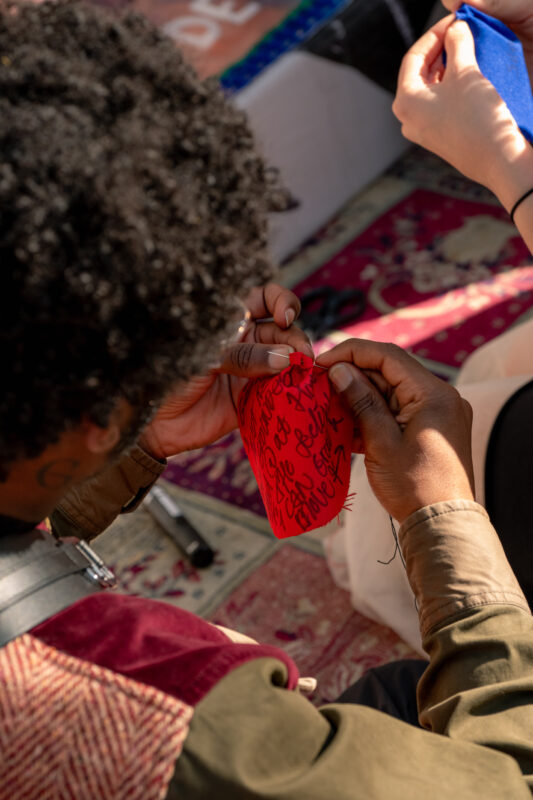
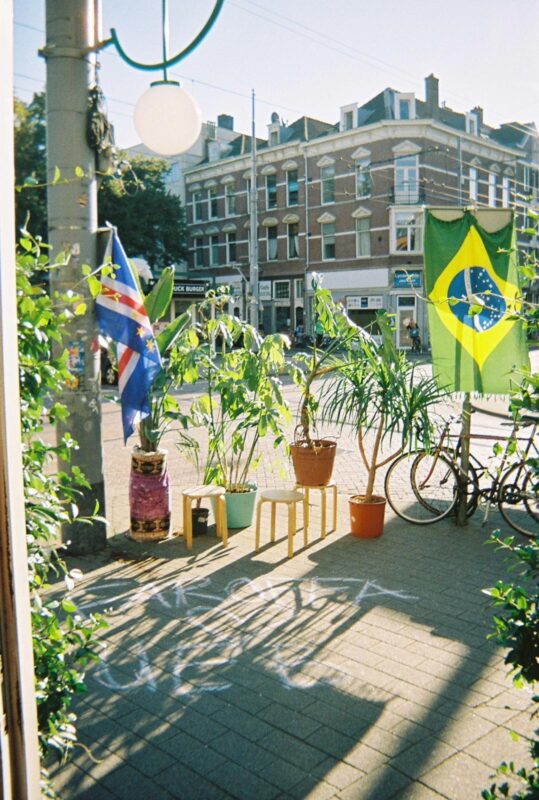
This research explores the possibility of temporary spaces of belonging, where people encounter each other across cultural, social, and personal differences. Working at the intersection of textile practice, food, and cultural gatherings, it asks what conditions allow genuine encounter to happen, and what an educator’s role is in creating them without controlling them.
The research unfolds in three parallel layers: a personal one, tracing the knowledge carried from Brazil to the Netherlands through family, migration, and making; a practice one, documenting three iterations of Mutual Mending – a workshop where participants stitch onto each other’s clothing while sharing memories of home; FAROFFA, a cultural event co-produced in Rotterdam celebrating the cultures of Brazil and Cabo Verde; and a research one, building a theoretical framework through the work of Paulo Freire, bell hooks, Audre Lorde, and others that think about intimate pedagogy.
The publication itself enacts the research: personal writing, practice documentation, and theory exist simultaneously, contaminating and informing each other rather than forming a linear argument. Theory does not sit above practice and explain it. It arrives through practice, through the memory of garlic on a cutting board, through a red thread still on a sleeve months after the workshop ended, through someone holding an instrument for the first time while jamming with others. This is research about what learning looks like when it happens in a kitchen, in a circle on the floor, in a celebration. About what it means to create conditions for encounter and let it happen.
Thesis: